Before the show
Temple of Heaven, then show
An afternoon at the Temple of Heaven and a look at Hongqiao Market, then an hour of acrobatics: the area around Xingfu Street in Dongcheng.
Book the acrobatics hour ↗Quick answer
Spend the afternoon at the Temple of Heaven, a UNESCO World Heritage Site first built in 1420, then walk or ride the short distance to the acrobatics. Hongqiao Market is nearby too. Both sit in Dongcheng, the district that took in old Chongwen in 2010, which makes this one of the easiest afternoon-and-evening pairings in Beijing.
Why pair them
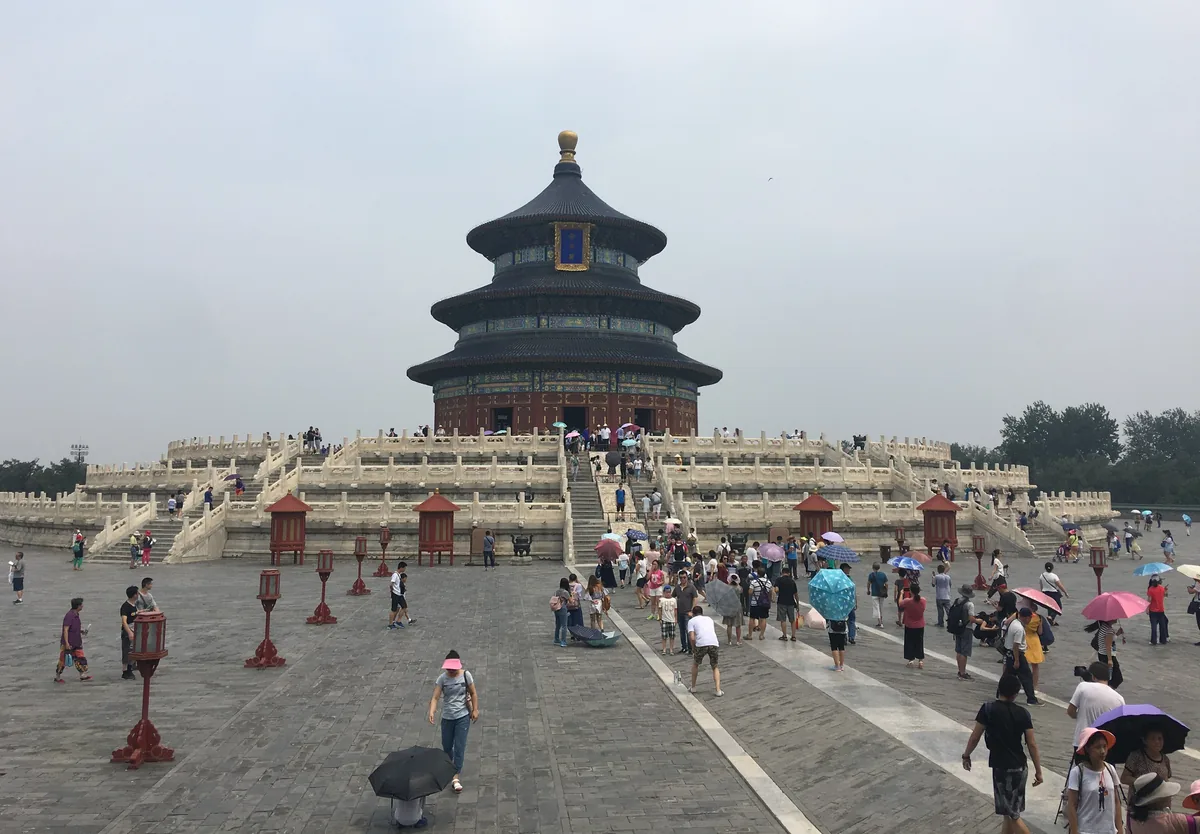
The theatre and the temple are neighbours, so the afternoon flows into the evening without a long journey across the city. Wikipedia places the Temple of Heaven in Dongcheng, the district that covers the eastern half of Beijing's old city and absorbed Chongwen, to its south, in 2010. The theatre began as the main hall of the Chongwen Workers' Cultural Palace, so the whole afternoon stays within the old Chongwen area.
The temple in brief
The Temple of Heaven is a complex of imperial religious buildings where Ming and Qing emperors performed ceremonies of prayer to Heaven for good harvests, says Wikipedia. It was first built in 1420 under the Yongle Emperor, who was also responsible for the Forbidden City, and it joined UNESCO's World Heritage List in 1998. Later emperors expanded and rebuilt it, and it opened to the public as a park in 1918.
Three things to see
Wikipedia describes three main groups of buildings. The Hall of Prayer for Good Harvests is a triple-gabled circular wooden building, 38 metres tall, built without nails. The Imperial Vault of Heaven is a smaller circular hall ringed by the Echo Wall, which can carry sound over large distances. And the Circular Mound Altar is an open platform on three marble levels, where the emperor prayed for favourable weather.
Circle and square
The layout carries a message. In the temple's symbolism, Earth is represented by a square and Heaven by a circle, and several features of the complex join the two, Wikipedia explains. At the Circular Mound Altar, the numbers of balusters, steps and other elements are nine or multiples of nine. Notice the round shapes as you walk, from the halls to the altar, and the square courtyards that frame them.
The east gate and the park
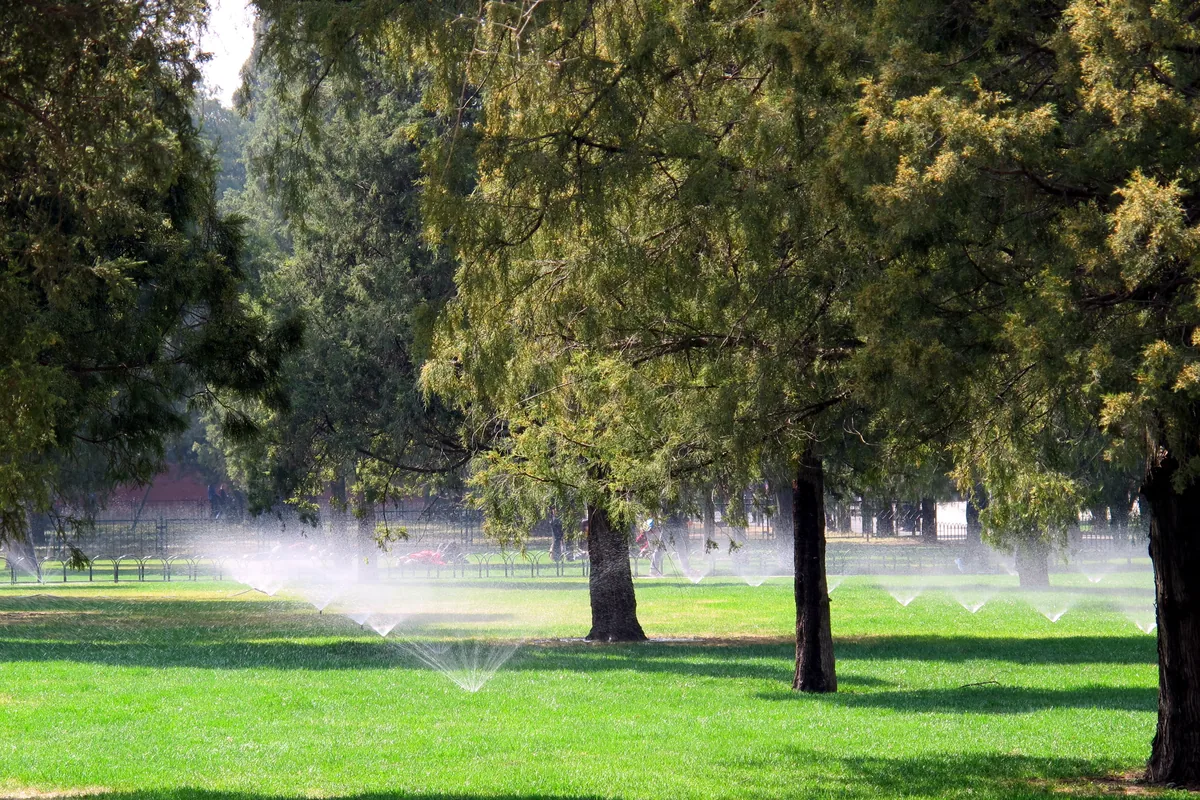
Temple of Heaven Park is the largest park in Dongcheng, at 267 hectares, says Wikipedia, and its old trees make it a calm place to slow down before a show. The east gate gives its name to the metro station nearest the theatre. A timed entry ticket for the temple can be booked ahead from the cards on this site's home page.
Hongqiao Market
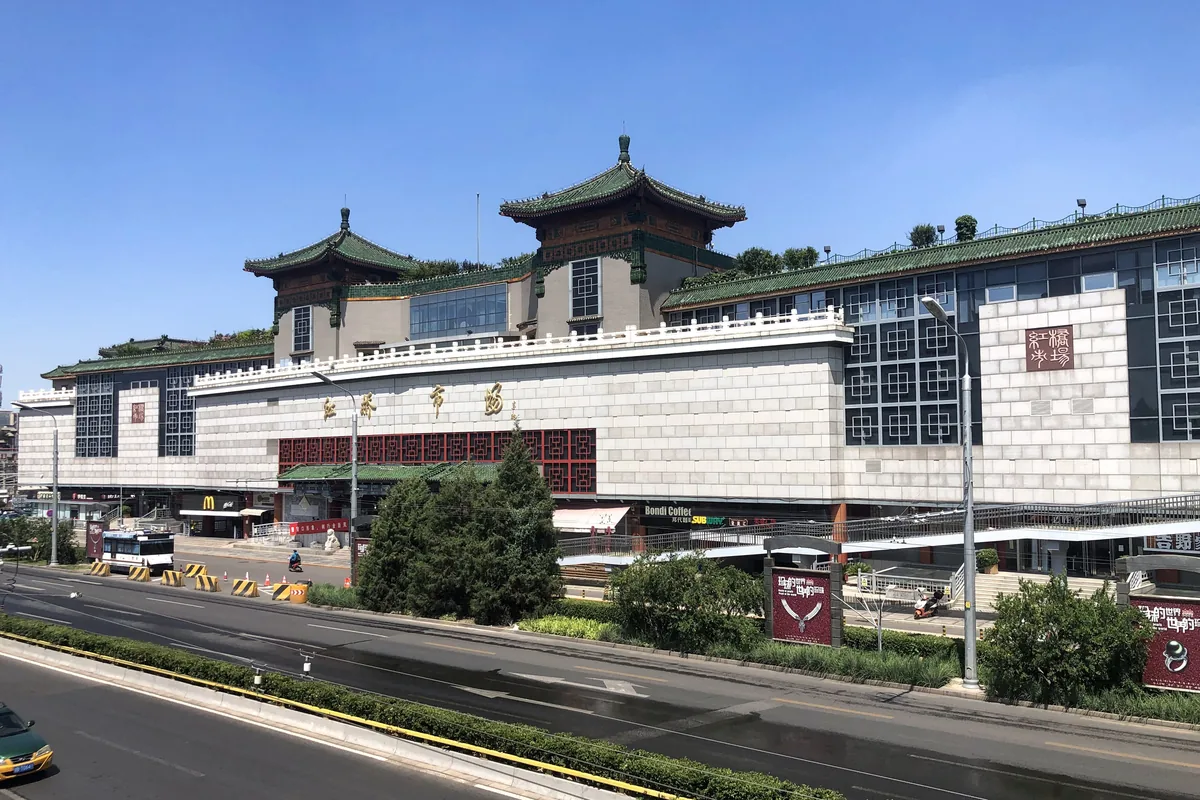
Hongqiao Market stands close to both the temple and the theatre, which makes it an easy stop for shoppers with time to spare. Many visitors know it as the Pearl Market. It is a market rather than a sight in itself, so treat it as a place to browse for half an hour, not to fill the afternoon, and leave room in your timing for the walk to the show.
Putting it together
A good shape for the day: arrive at the temple in the early afternoon, walk the main axis from the altar to the Hall of Prayer, leave by the east gate, look in at Hongqiao Market if you like shopping, then head to the theatre with enough margin to find your seat. After one hour of acrobatics, you are free for dinner. Work backwards from the show's start, which the booking calendar gives for each date.
Frequently asked questions
How close is the Temple of Heaven?
Close: both are in Dongcheng, and the metro station by the park's east gate is the nearest stop to the theatre.
When was the Temple of Heaven built?
First in 1420, under the Yongle Emperor. UNESCO listed it in 1998.
Can I book temple tickets ahead?
Yes; a timed entry ticket is among the cards on this site's home page.
Sources